
May 20, 2026
Most travelers arrive in Bucharest with no idea what Romanian food actually is. A few have heard of sarmale. Almost nobody can name a Romanian wine. The cuisine doesn’t have the export brand that Italian, French, or Hungarian food has — there is no Romanian restaurant in their home city, no Romanian dish that crossed over the way pizza or pho did. They show up open, slightly nervous, with no point of comparison.
That is the best possible state to arrive in. Bucharest’s food scene rewards exactly that kind of visitor — the one who isn’t trying to fit what they eat here into a category they already know.
After fourteen years of taking guests through this city — Laura still leads most of the food tour days personally — here is what I would actually tell a friend visiting for the first time.
What Romanian food actually is
Romanian cuisine is a Balkan cuisine that pretends to be more Central European than it is. The base is peasant cooking: sour soups, stewed meats, cornmeal in everything, lots of pickling, lots of smoking, lots of fat. The flavors are influenced by Turkey (the south), Hungary (the west), Russia and Ukraine (the northeast), Greece (a little), and Western Europe in particular pockets — the parts of the nineteenth-century bourgeoisie who imported French chefs in the 1880s and never quite let go.
In practice that means the standard dishes have layered family trees. Sarmale — minced pork wrapped in fermented cabbage leaves — exists across the Balkans and Turkey under different names, but the Romanian version uses pickled cabbage and gets served with mămăligă (yellow cornmeal polenta) and a dollop of sour cream. Mici (also spelled mititei — “the little ones”) are short grilled rolls of minced beef-and-pork with garlic and spice; they are a Bucharest summer specialty and the city’s main contribution to the national repertoire. Ciorbă — the sour soup family — is essentially the heart of the cuisine. The tripe version (ciorbă de burtă) is the famous one and is an acquired taste; ciorbă de fasole cu costiță afumată (bean soup with smoked pork rib, often served in a hollowed-out bread bowl) is the entry-level version and one of the better things to eat in winter.
If you want a single dish to anchor your trip, make it sarmale with mămăligă and pickles. That combination tells you most of what you need to know about how this country cooks.
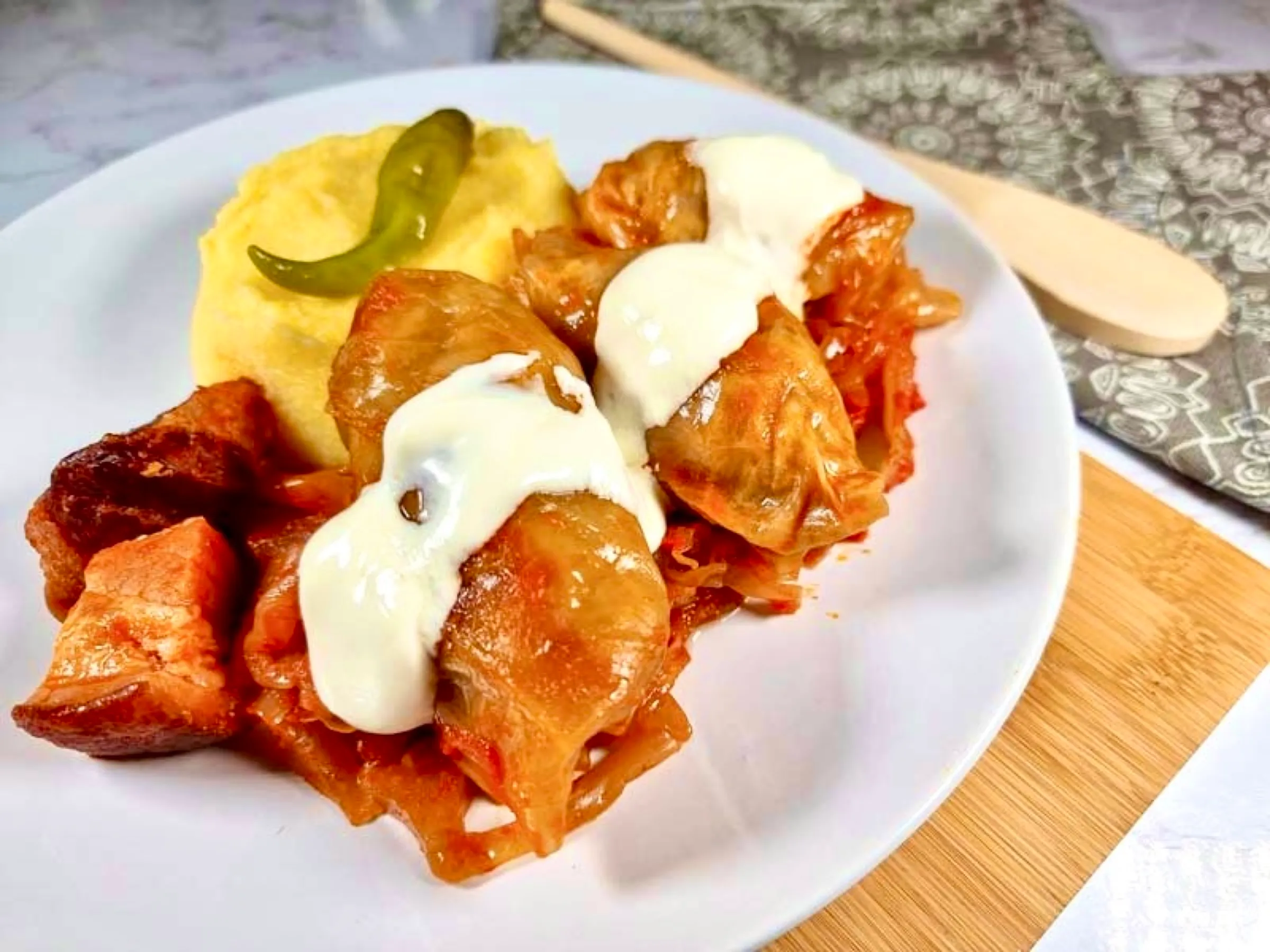 Sarmale with mămăligă — the anchor dish. Order this within the first day and the rest of the menu becomes legible.
What it isn’t
Romanian food is not refined. The plating is rough, the portions are large, the meat is generous, the vegetables tend to disappear under sour cream. There are excellent contemporary chefs in Bucharest doing modern interpretations — and that scene is genuine, growing, and worth seeking out — but the traditional version is a peasant cuisine and doesn’t pretend otherwise.
It is also not particularly vegetarian by default. The good news is that the country has a robust Orthodox tradition of fasting periods, which means a whole parallel “post” cuisine of vegetable-only dishes — bean spreads, eggplant salads, sauerkraut, mushroom pilaf, sweet and savory pies. It is delicious and historically grounded. Any decent restaurant has them on the menu. Guests on our food tour who eat vegetarian or vegan have never come out hungry; the food just rearranges around them.
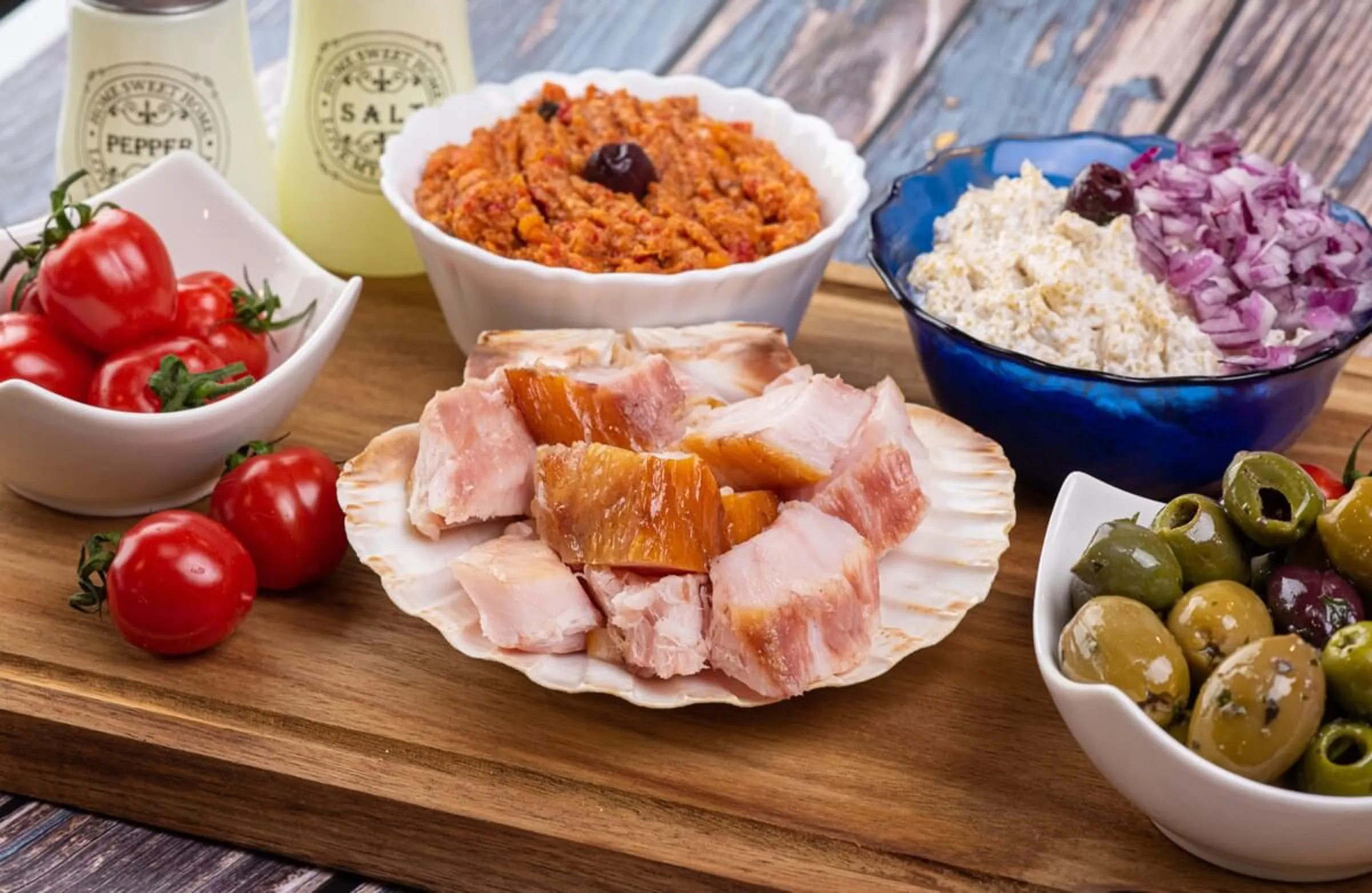 Cold platter starters: smoked sheep cheese, eggplant salad, zacuscă, peasant bread. The opening course in almost any traditional restaurant.
Where the food actually lives
Three layers, in increasing order of how hard they are to find on your own:
The Old Town tourist restaurants. Caru’ cu Bere is the famous one — an 1879 beer hall on Strada Stavropoleos with carved wood, painted ceilings, a traditional menu, and folk dancers at peak hours. It is touristy, full, and overpriced. It is also genuinely beautiful, and the food is not bad. If you go, go before 7 pm on a weekday and order the sarmale or the mici. Hanu’ lui Manuc — a converted early-nineteenth-century caravanserai courtyard around the corner — is the other one. Same caveats.
The real restaurants. Lacrimi și Sfinți (“Tears and Saints”), tucked into the Old Town in the old Zambaccian family house, is the one I send guests to when they want the modern interpretation done properly. It belongs to the poet Mircea Dinescu. The dining room is built from reclaimed barn beams, doors from abandoned houses, ceramics handmade by artisans from Vâlcea and Harghita; the menu is Romanian classics reworked without being sterilized. It overlaps with the tourist circuit but is consistently very good. A German guest of ours recommended it to us back in 2014 and the version that exists now is still on its feet.
Beyond the centre, in Cotroceni, Floreasca, and Dorobanți, are the everyday restaurants where Bucharest residents actually eat. You will not find these by walking — they need a destination and ideally someone who already knows which one is open this season.
The markets. Piața Obor in the east of the city is the working market: a covered hall of butchers, dairy stalls, sour-cream tubs, and a famous mici stand on the perimeter that locals queue at on Sunday mornings. Piața Amzei in the centre is the bourgeois version — smaller, less raw, easier if you only have an hour. Both are good. If you visit one, go hungry.
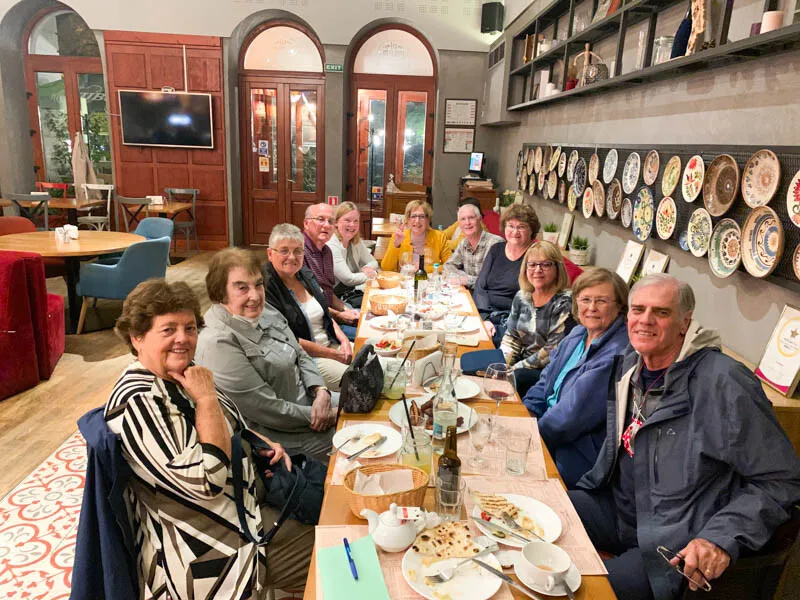 A typical food-tour stop — three or four courses out at once, conversation in two or three languages, and far more food than anyone planned on.
A handful of specific things to seek out
- The éclairs at French Revolution. A Bucharest chain that opened roughly a decade ago and now has shops across the centre. The flavors include some that would horrify a Parisian (rose, salted caramel with bacon) and they are better for it. The Calea Victoriei branch is the easiest to find.
- Papanași — fried dough rings with sweet cottage cheese inside, served with sour cream and visnata (sour-cherry) jam. Order them anywhere. They will be too big.
- Covrigi — pretzel rings sold from sidewalk windows for one or two leu. The version with poppy seed is the right one. They are the closest thing this country has to a national snack.
- Pastramă — smoked mutton, very specific to Romania, very different from American pastrami despite the shared word. Order it as a starter at any traditional restaurant.
- Mămăligă cu brânză și smântână — polenta with sheep cheese and sour cream. The thing to eat when you want to taste the actual countryside.
- A glass of Fetească Neagră — the indigenous red grape. Look for one from the Dealu Mare region, about an hour and a half from Bucharest, when you are picking.
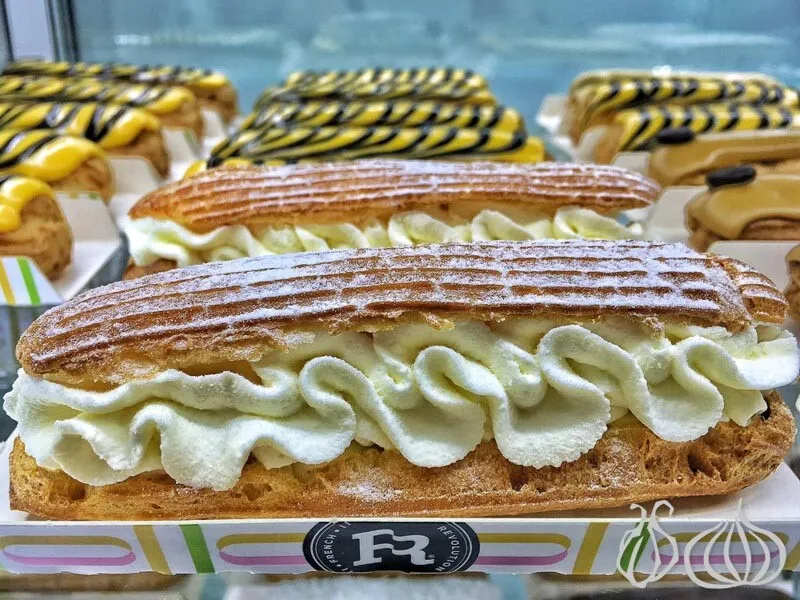 French Revolution éclairs — a Bucharest chain unimpressed by Parisian rules
What to skip, honestly
Skip the tourist restaurants on Lipscani Street with food photos on placards out front. Skip anywhere that has a staff member trying to lure you in from the sidewalk. Skip “Dracula-themed” anything. Skip Caru’ cu Bere on a Saturday night.
Skip the chain pizza and the chain burgers — Bucharest has both, they are exactly what you would expect, and you did not come here for them.
And skip trying to eat everything in one trip. Romanian portions defeat ambition. A guest of ours from the States once wrote in her review: “Bring your biggest stomach and your walking shoes.” That is the correct posture. Eat slowly. Walk between meals. Take a break for an espresso.
The honest answer
Bucharest is one of the most underrated food cities in this part of Europe. It does not have Vienna’s polish or Istanbul’s range, but the prices are roughly a third of Prague’s, the average quality is rising faster than anywhere else I track, and the traditional food — when you find the right version of it — is genuinely good. Give the city three or four meals to make its case and it will.
If you would rather not work out which version of each dish is the right one, Laura runs the food tour herself most weeks — three or four stops, four or so hours, no breakfast required.