
May 19, 2026
The first impression of Bucharest is the airport drive. About twenty-five minutes from Otopeni into the centre, mostly along a road the city is still figuring out how to finish: half-built malls, two-storey billboards, a Lidl, then a stretch of grey concrete blocks left over from the 1980s. I have been picking guests up from that airport for fourteen years and I can usually predict the question that comes once we cross into the centre. “So… is this it?” Or, more politely, “Is it like this everywhere?”
It is a fair question. The honest answer is that Bucharest does not introduce itself well. Almost every city we compete with for visitors — Prague, Budapest, Vienna, Krakow — leads with a polished historical centre that announces itself in the first ten minutes. Bucharest leads with the airport road, then a couple of brutalist boulevards, and only later, and only in pieces, with the parts of itself that are genuinely beautiful.
A guest of ours described the city last summer as “a rough diamond.” I keep using the phrase because it is accurate. The diamond is there. It just doesn’t bother polishing itself for you.
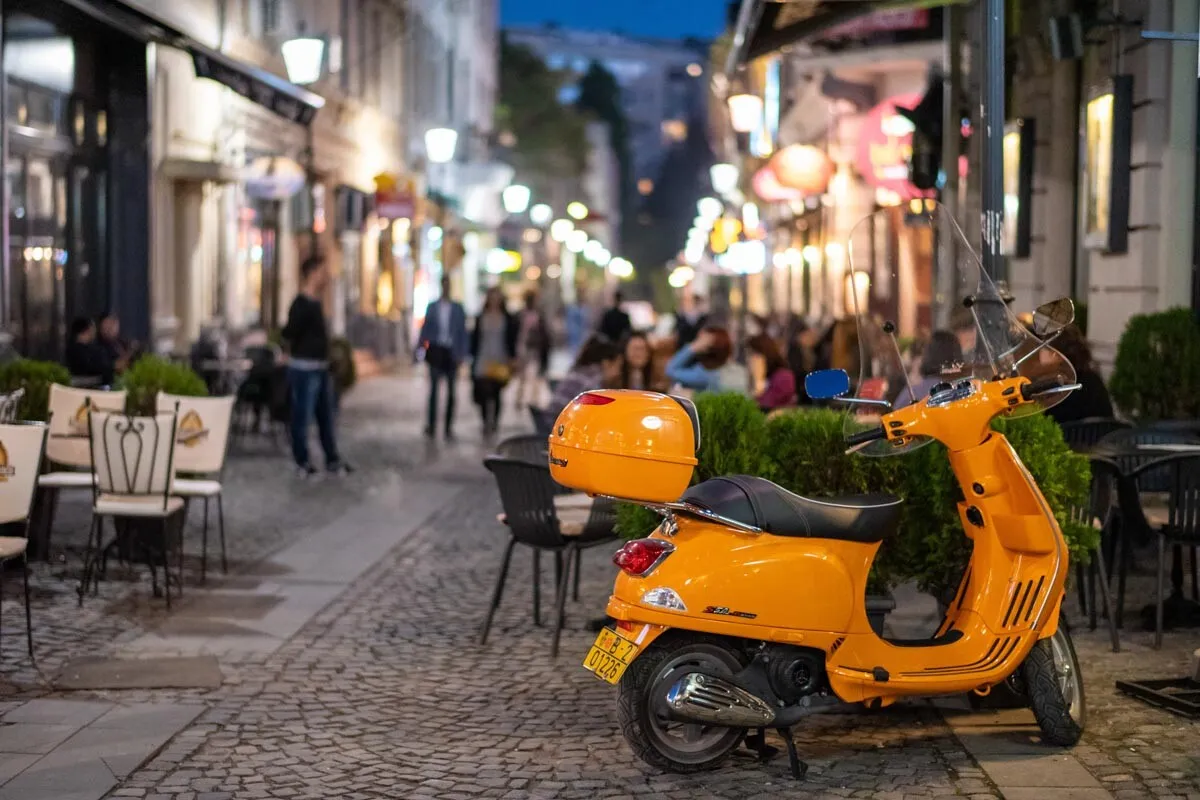 The Old Town, on a quiet afternoon — minus the bars and souvenir traps that fill it after dark
What people expect, and what’s actually here
Most people arrive with one of two pictures in their head. The first is “Little Paris of the East,” and they’re looking for an intact Belle Époque city with cafés on every corner. The second is the Cold War cliché: a grey, post-communist place where you tick off the Palace of the Parliament and leave.
Neither is right. The Little Paris reputation came from a real thing. Between the 1880s and the late 1930s, Bucharest went through a French-architectural boom — French architects, French-trained Romanian ones, and very deep municipal pockets. About a third of that fabric is still standing. The rest was either pulled down by Ceaușescu in the 1980s to clear ground for his civic centre, knocked over by the 1977 earthquake, or quietly demolished after 2000 by developers who preferred an office tower to a Belle Époque townhouse.
So Bucharest is neither Paris nor Pyongyang. It is a city that survived three things: interwar wealth, communism, and the messier-than-anyone-expected first thirty years of democracy. You can read all three on every block once you know what you’re looking for.
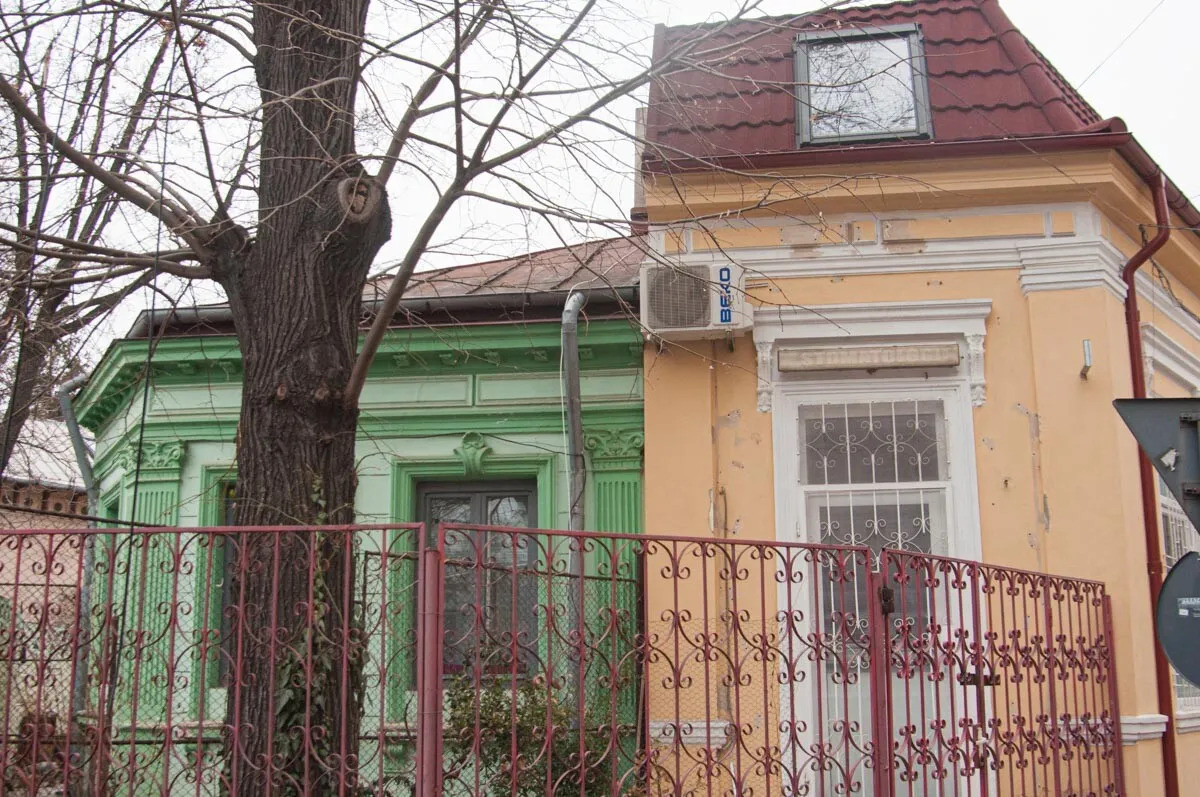 One of the surviving fin-de-siècle houses — most are still inhabited, many quietly falling apart, a few being restored
What actually wins people over
What gets people on this city is almost never the Palace of the Parliament. They tick it off, take a photo from outside, and forget it within a week. What sticks is smaller and stranger.
The modernist architecture, mostly. Bucharest has one of the largest and least-known stocks of pre-war modernism in Europe. Marcel Iancu (better known abroad as Marcel Janco, one of the founders of Dadaism), Horia Creangă, Duiliu Marcu — names almost no foreign visitor has heard, but they produced apartment buildings on Magheru Boulevard that serious architecture historians still come specifically to see. Most were built between 1933 and 1940, between two wars, and most are still lived in. Standing in front of the Solly Gold building with someone who has just spent a week in Vienna is one of the more satisfying parts of this job. They have seen a thousand Habsburg facades. They have not seen this.
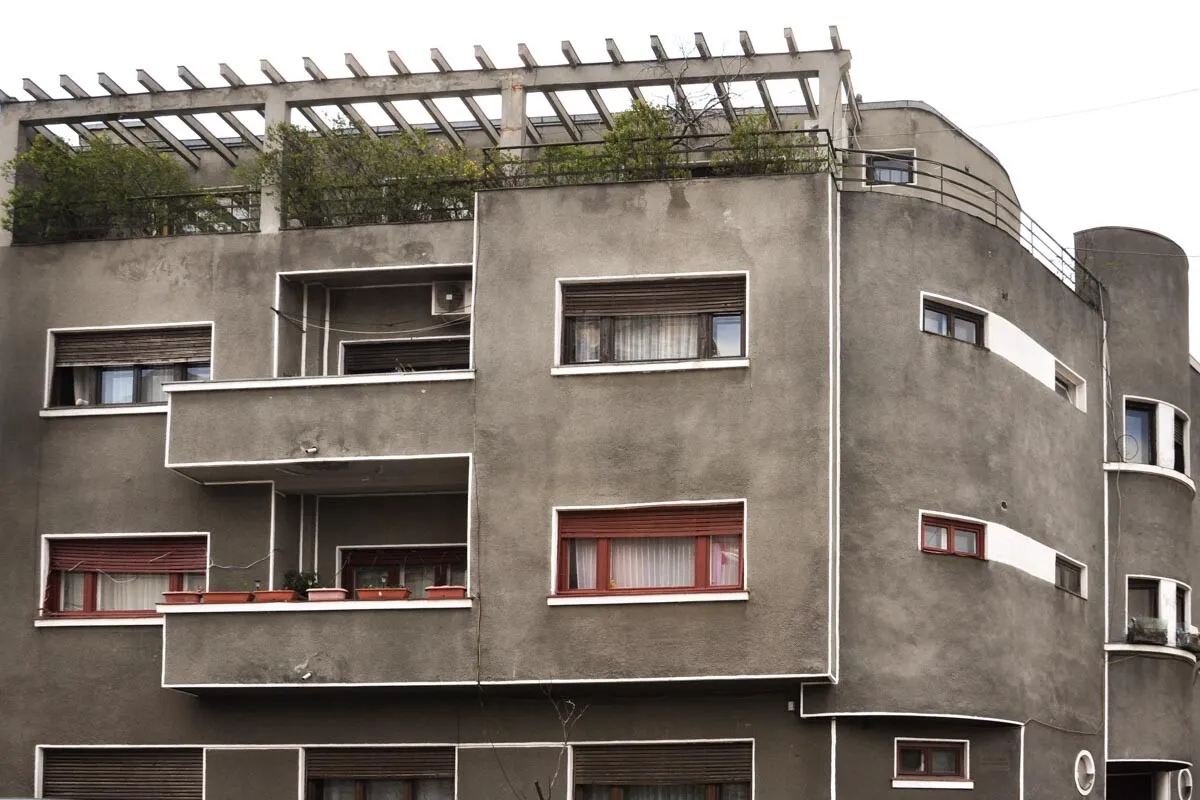 David Haimovici Building, designed by Marcel Iancu — the kind of facade most visitors walk past three times before noticing
The other thing that surprises people is the courtyards. The houses behind the Old Town facades are not, as the street suggests, abandoned. Many are still inhabited, with gardens and grapevines and dogs sleeping on tile. Two visitors who had actually grown up in Bucharest told us, after one of our tours, that they hadn’t seen the places we showed them that afternoon. The city is like that. Most of it is technically visible, but it sits behind a courtyard wall or a sealed door, and the average tourist walks straight past.
And then the small things. Lighting a candle in Stavropoleos, a tiny eighteenth-century church a hundred metres from a Starbucks. Finding the bar inside the former Communist Party staff building. Eating sarmale that someone’s grandmother actually cooked that morning, not in a tourist restaurant but in an apartment in Floreasca. Written down it doesn’t sound like much. In person it tends to be the bit people remember.
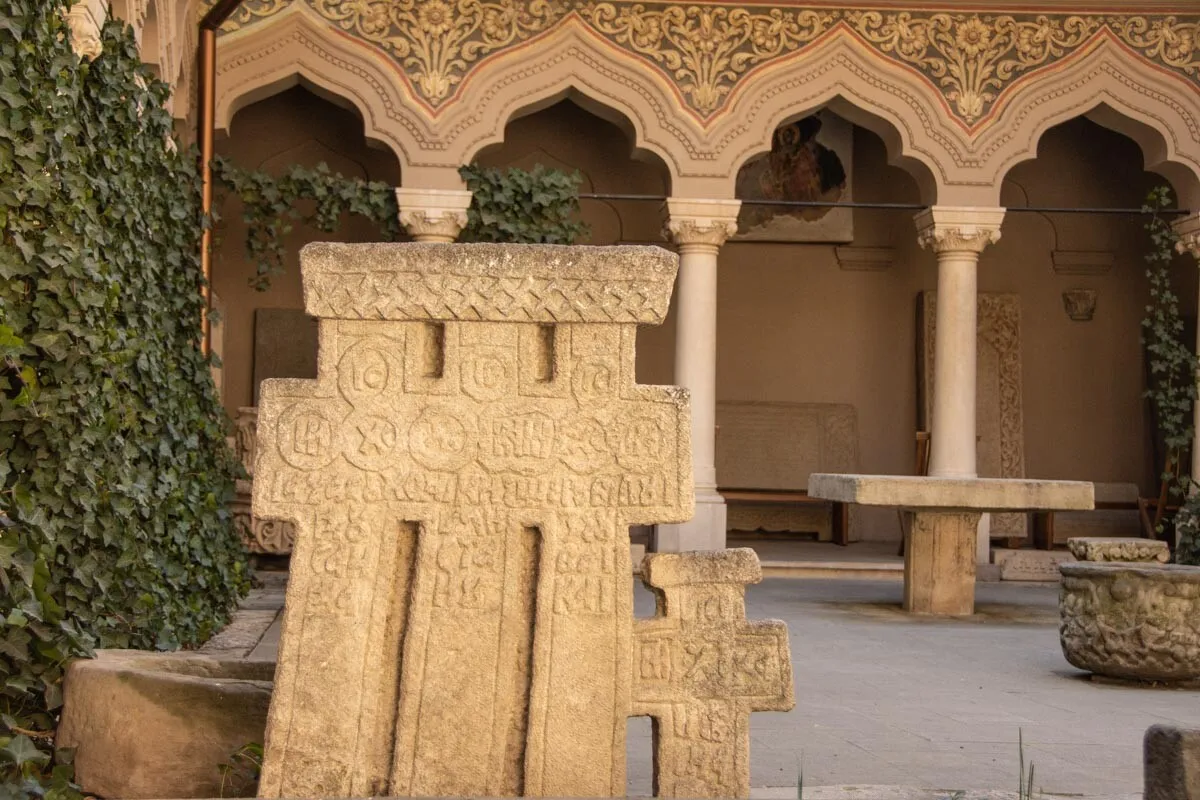 Stavropoleos, 1724 — a hundred metres of distance from the loudest stretch of the Old Town, two centuries of distance in feel
What changed in the last twelve years
Laura started this work in 2012 and I joined her not long after. The Bucharest we show now is not the one we started showing.
In 2012, the Old Town was new as a nightlife district and patchily restored. There were a handful of restaurants you could send a guest to without thinking. The stray-dog crisis was still recent enough that visitors brought it up in the first hour. There was one decent specialty coffee shop in the centre and you walked twenty minutes to get to it.
What’s happened since is partly visible and partly not. The Colectiv nightclub fire in October 2015 killed sixty-five people and triggered the largest sustained anti-corruption protests since 1989. The country has been arguing with itself about the consequences ever since, and you can feel it on the streets. Cărturești Carusel — the white-marble bookstore in the Old Town that now ends up on every Instagram feed of the city — opened in 2015 and changed the tone of the centre almost overnight. The restaurant scene grew up: it is now genuinely difficult to eat badly in Bucharest if you spend ten minutes choosing. The coffee scene exploded. There are now more good roasters than I can keep up with, which was not true in 2012.
The 2024–2025 election turmoil — a presidential vote annulled by the Constitutional Court, a second one re-run six months later — is the most recent thing guests bring up, often anxiously. I tell them what I tell everyone. Nothing about visiting changed. The streets are calmer than the news.
What’s still hard about Bucharest
I won’t pretend the city has solved itself. The sidewalks are still parked on. The pavement is uneven. There are stretches of Calea Victoriei, the most famous street in the city, where a freshly restored Belle Époque building sits next to a half-collapsed one with weeds growing out of the cornice. The metro works, but the map ignores half the neighbourhoods you might actually want to visit. English signage gets sparse outside the centre. Drivers treat zebra crossings as suggestions.
For a certain kind of traveller this will be uncomfortable. The kind who wants a city that is fully labelled, fully restored, and fully obvious. Last October we had two one-star reviews from guests who said as much, in different words. They wanted formal art-historical commentary on every church we entered; we gave them stories about the people who built those churches and the political moment they were built in, which is how we generally work. They left disappointed and I think that is fair enough. Bucharest is not the city for somebody who wants the Florence experience. If you want the Florence experience, go to Florence.
So, is it worth coming
If a friend asked, here is what I would write back.
Yes. Three or four nights. With a guide for at least one of them, because the city does not unlock on its own and Google Maps is useless for the parts that matter. Skip it if you want a postcard. Come if you like cities that have been through something and that haven’t yet decided to clean themselves up for the tourism board. Don’t compare it to Vienna or Prague. That comparison only flatters the other cities. Compare it to Naples, or Belgrade, or Lisbon in 2005. That is the shelf Bucharest sits on, and it is the more interesting shelf.
If you do come, bring decent shoes, an appetite, and the patience to look behind one or two courtyard walls. The diamond is there.
If you want help finding it, we’d be glad to walk you through it.